
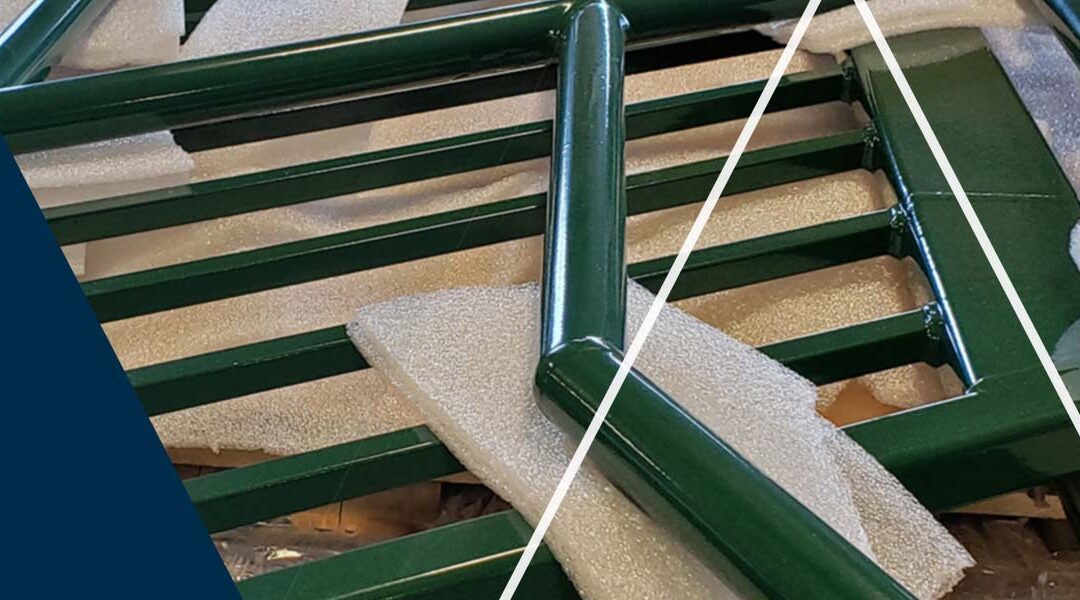
Choosing a finish is a crucial step in metal fabrication. The type of metal finish can impact your product’s lifespan, appearance, and performance. With an array of different metal finishes available, it’s essential to select one that suits your material, application, and project budget.
Architects and builders need a clear understanding of these options to ensure their designs withstand environmental stressors while meeting aesthetic standards. Learn more about the different types of metal finishing available for your project and how to choose the best option based on your needs.
Why Your Choice of Metal Finish Matters
A metal finish is a functional barrier that stands between your fabricated part and its environment. For industries ranging from defense to energy, the integrity of this barrier can create a part that lasts for decades.
With a professional finish, you receive three primary benefits:
- Protection from the environment: Unfinished metal is vulnerable to moisture, chemicals, UV radiation, and salt spray. A quality finish seals the underlying metal to prevent oxidation and rust.
- Enhanced durability: Finishes provide a hard outer shell that improves resistance to scratches, abrasion, and physical impact so the part continues to meet required specifications over time.
- Aesthetic and functional integrity: Whether you need a nonreflective matte surface for military use or a high-gloss color for a consumer product, the finish locks in the visual identity.
5 Common Finishes for Fabrication Projects
There are dozens of ways to finish metal, but most fabrication projects rely on a few core techniques. Understanding the strengths and limitations of each is essential for choosing the best process for your project.
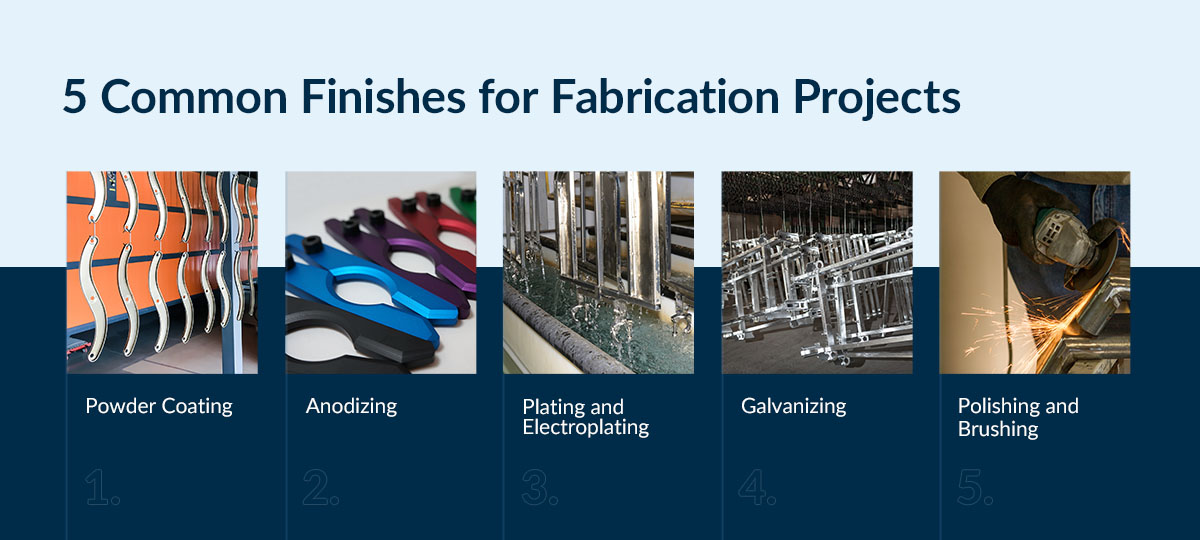
1. Powder Coating
Powder coating is one of the most popular finishes for modern fabrication due to its superior durability and versatility. Unlike traditional liquid paint that contains solvents, powder coating applies a dry powder electrostatically. The part is then cured under heat, causing the powder to flow and form a skin.
This process provides several key benefits:
- Extreme durability: The thermal bonding process creates a finish that is much harder and thicker than conventional paint.
- Uniform coverage: It provides an even coat without drips or runs, even on complex shapes.
- Eco-friendly: The process minimizes waste, and powder coating emits minimal hazardous air pollutants.
Powder coating is the go-to solution for high-traffic architectural metalwork such as railings, stair stringers, and fencing. It is also the industry standard for industrial equipment and enclosures that require maximum impact and scratch resistance. If your project involves carbon steel or aluminum and needs specific color matching, powder coating is your best option.
2. Anodizing
Anodizing is an electrochemical process primarily used for aluminum. Instead of applying a layer on top of the metal, anodizing changes the surface chemistry of the metal itself. This process immerses the aluminum in an acid electrolyte bath and passes an electric current through it, thickening the natural oxide layer on the surface.
Engineers choose anodizing for advantages like:
- Integral protection: Because the finish is part of the metal, it is less susceptible to chipping or peeling like paint.
- Metallic aesthetic: It allows the natural metallic character of the aluminum to shine through even when dyed different colors.
- Hardness: Hard-coat anodizing can create a surface harder than tool steel and offers exceptional wear resistance.
Anodizing aluminum parts can benefit the aerospace and defense sectors, where weight and durability are critical. It is also ideal for consumer electronics and architectural trim where a premium, metallic look is required. It is not suitable for steel or iron parts.
3. Plating and Electroplating
Electroplating involves depositing a thin layer of one metal onto the surface of another using an electric current. Common plating materials include zinc, chrome, nickel, and gold. This process is often used to alter the surface properties of a cheaper base metal.
Plating offers benefits like:
- Specific properties: Plating can add electrical conductivity, heat resistance, or solderability to a part.
- Decorative appeal: Chrome and nickel plating offer a high-shine, mirror-like finish associated with classic automotive styling.
- Cost-effective protection: Zinc plating provides a basic level of corrosion resistance for small parts at a low cost.
Plating is essential for automotive components, fasteners, and electrical connectors. In the energy sector, contacts that require high conductivity are often plated with silver or gold. Plating is also suitable when a part needs a specific functional property or a classic “bright” decorative look.
4. Galvanizing
Galvanizing is the process of dipping steel into a bath of molten zinc. The zinc bonds metallurgically to the steel and creates a robust protective layer. Galvanizing is distinct from zinc plating because the layer is much thicker and provides a sacrificial anode, meaning the zinc will corrode before the steel does, even if the coating is scratched.
Reasons to choose galvanizing include:
- Unparalleled rust protection: It offers the longest-lasting protection for steel in outdoor environments.
- Self-healing: The sacrificial nature of zinc protects small exposed areas from rusting.
- Low maintenance: Galvanized structures can go decades without requiring maintenance.
Galvanizing is the standard for structural steel, outdoor railings, and highway infrastructure. If your project involves steel components exposed to harsh weather, high moisture, or corrosive salt-spray environments, galvanizing is the superior choice for longevity.
5. Polishing and Brushing
Polishing and brushing are mechanical finishing processes that alter the surface texture of the metal itself without adding a coating. Polishing uses abrasive compounds to remove surface imperfections and create a reflective shine. Brushing uses grit belts to create a uniform, directional grain or satin finish.
These mechanical finishes offer distinct benefits, including:
- Sanitary surfaces: Polished stainless steel is easy to clean and resistant to bacteria.
- Aesthetic control: These finishes create a specific visual texture that hides fingerprints in the case of brushing or highlights cleanliness for polished surfaces.
- Reduced wear: Polishing creates a smooth surface that reduces friction and wear, especially between metal components.
Mechanical finishing is best used when appearance is the primary goal. Polishing and brushing are standard for architectural trim, decorative interior pieces, and stainless steel kitchen components. In the food processing and pharmaceutical industries, polished finishes are required to prevent bacterial growth.
How to Choose the Right Finish for Your Project
To select the ideal finish, you need to balance your project’s environment, durability needs, and aesthetic goals. Match the finish’s strengths to your specific application to ensure your project performs as well as it looks.
- Start with the environment: For harsh outdoor environments or structural steel, galvanizing offers the longest-lasting protection, while powder coating provides a durable, weather-resistant barrier with endless color options.
- Consider the material: If your design calls for a premium metallic look on aluminum, anodizing is the superior choice for both style and surface hardness.
- Define functional needs: For components requiring specific functional properties like electrical conductivity, plating is the standard solution.
- Prioritize aesthetics: For indoor applications where the raw beauty of the metal is the priority, mechanical finishes like polishing or brushing offer a clean, sophisticated appearance.
Partner With an Expert for a Flawless Finish
The right metal finish is a critical investment in your project’s success. It ensures that your structural beams resist rust, your architectural railings maintain their beauty, and your industrial components withstand daily wear and tear.
At Mid-Atlantic Steel Fabrication, we are a one-stop shop for durable finishing solutions. Whether you need custom timber frame brackets or precision industrial parts, our team helps you select the ideal finish to meet your aesthetic and functional goals.
Have a project in mind? Contact us today to discuss your fabrication and finishing needs or request a quote.